
What Is Bauxite? Uses, Types and Where It Is Found
Bauxite is the world’s primary ore for aluminium, also spelled aluminum in US English, and the starting point for most aluminium profiles used in construction, transport, energy and industrial systems. It is not a single mineral. Instead, bauxite is a naturally occurring rock made of aluminium hydroxide minerals, iron oxides, silica, titania and other impurities.
For procurement managers, engineers and sustainability teams, bauxite matters because it sits at the beginning of the aluminium value chain. Mine quality affects refining efficiency. Refining efficiency affects alumina quality. Alumina quality affects smelting, billet casting, extrusion and, eventually, the performance of aluminium profiles in real projects.
What Is Bauxite?
Bauxite is a sedimentary rock rich in aluminium-bearing minerals, mainly gibbsite, boehmite and diaspore. It is the main commercial source of alumina, which is refined into primary aluminium through the Bayer and Hall-Heroult processes before being cast into billets and extruded into aluminium profiles.
Bauxite usually forms in warm, wet tropical or subtropical environments where intense weathering removes soluble elements from parent rocks. Over long periods, this process leaves behind aluminium-rich material that can be mined, washed, refined and converted into industrial aluminium.
In practical terms, bauxite is the link between geology and manufacturing. A reddish ore removed from the ground can eventually become a curtain wall frame, a solar mounting rail, a machine guard, a transport component or a custom extrusion.
Chemical Composition of Bauxite
Bauxite is a heterogeneous material, which means its composition changes by deposit, region and mineralogy. Most commercial bauxites contain aluminium hydroxide minerals, along with impurities that must be managed during refining.
Typical components include:
| Component | Role in bauxite | Industrial relevance |
|---|---|---|
| Gibbsite | Aluminium hydroxide mineral | Easier to digest in the Bayer process |
| Boehmite | Aluminium oxyhydroxide mineral | Requires higher processing intensity |
| Diaspore | Aluminium oxyhydroxide mineral | More difficult to process than gibbsite |
| Iron oxides | Common impurity | Gives many bauxites a red, brown or orange colour |
| Silica | Common impurity | Can consume caustic soda and reduce refining efficiency |
| Titania | Common impurity | Generally remains in bauxite residue |
| Minor minerals | Deposit-dependent | Affect processing behaviour and residue chemistry |
The exact chemistry is important because alumina refineries are designed around ore characteristics. High reactive silica, for example, can increase reagent consumption. High iron content affects residue volume and colour, but it does not necessarily make a deposit unusable.
Aluminium Hydroxide Minerals: Gibbsite, Boehmite and Diaspore
The aluminium-bearing minerals in bauxite determine how the ore behaves in the refinery. The three most important are gibbsite, boehmite and diaspore.
| Mineral type | Formula | Water content / characteristics | Processing temperature | Ease of use |
|---|---|---|---|---|
| Gibbsite | Al(OH)3 | Higher chemically bound water; common in tropical lateritic bauxites | Lower Bayer digestion temperatures | Generally easiest to refine |
| Boehmite | AlO(OH) | Lower water content than gibbsite; denser crystal structure | Higher digestion temperatures than gibbsite | Moderate difficulty |
| Diaspore | AlO(OH) | Same formula as boehmite but different crystal structure | Usually requires more severe digestion conditions | Most difficult of the three |
Gibbsite Bauxite
Gibbsite-rich bauxite is usually preferred by alumina refineries because it dissolves more readily in caustic soda during digestion. This can reduce energy intensity and simplify process control.
Boehmite Bauxite
Boehmite bauxite contains AlO(OH), the same chemical formula as diaspore but with a different crystal structure. It generally requires higher digestion conditions than gibbsite, so refinery design and operating parameters become more important.
Diaspore Bauxite
Diaspore is more resistant to digestion and can require more severe processing. Diasporic bauxites may still be valuable, but they need careful technical assessment before being matched with a refinery route.
Iron-Rich Bauxites
Iron-rich bauxites often have a deep red, brown or ochre colour. The iron oxides are not the target material for aluminium production, but they strongly influence residue composition after alumina extraction.
Common Impurities in Bauxite: Silica, Iron Oxide and Titania
Bauxite impurities are not minor details. They influence economics, residue management, process chemistry and the suitability of an ore for a given refinery.
Silica is one of the most important impurities because reactive silica can dissolve during Bayer processing and form desilication products. These reactions consume caustic soda and can reduce alumina recovery.
Iron oxide gives bauxite its familiar reddish colour. It normally remains in the residue after digestion, creating the red mud associated with alumina refining.
Titania, mainly in the form of titanium dioxide minerals, is usually present in smaller amounts. It does not drive the value of bauxite, but it contributes to the mineral balance of the residue stream.
Physical Properties of Bauxite
Bauxite is easy to recognise in many cases, but it is not visually uniform. Its appearance depends on mineral content, iron oxide concentration and weathering history.
Color, Density and Hardness
Bauxite is commonly red, reddish-brown, yellowish, grey or off-white. Iron-rich material is usually darker and redder, while lighter-coloured bauxites may contain less iron oxide.
Its hardness is generally low to moderate compared with many industrial minerals. Bauxite can appear earthy, pisolitic, granular or clay-like. Some samples contain rounded pea-sized structures known as pisolites, which are common in lateritic deposits.
From a handling perspective, bauxite is treated as a bulk mineral raw material. It is mined, crushed, washed where required and transported to refineries or export terminals.
How Bauxite Is Formed: The Lateritization Process
Bauxite forms mainly through lateritization. This is a long weathering process that happens when rainfall, drainage, heat and time remove soluble elements from rocks.
The process begins with parent rocks that contain aluminium-bearing minerals. Over time, intense chemical weathering leaches out silica, alkalis and other mobile components. Aluminium and iron remain behind because they are less soluble under those conditions.
This is why many major bauxite deposits occur in tropical regions. Warm temperatures and high rainfall accelerate weathering, while stable land surfaces allow the aluminium-rich layer to build over geological time.
Types of Bauxite
Bauxite can be classified in more than one way. Geologists often describe it by formation environment and mineralogy, while industry classifies it by commercial use.
Common industrial categories include:
| Bauxite type | Main basis of classification | Typical relevance |
|---|---|---|
| Metallurgical bauxite | Used for alumina and aluminium production | Dominant global use |
| Refractory bauxite | High alumina, suitable for heat-resistant materials | Furnaces, kilns and linings |
| Chemical-grade bauxite | Used for aluminium chemicals | Water treatment, chemicals and specialty products |
| Cement-grade bauxite | Used as an alumina source in cement | Calcium aluminate cement and cement additives |
| Abrasive-grade bauxite | Calcined for hard abrasive applications | Blasting media and grinding products |
A single deposit may not fit neatly into one category. Commercial suitability depends on alumina content, impurities, mineralogy, location, logistics and customer specifications.
What Is Bauxite Used For?
Most bauxite is used to produce alumina, which is then smelted into primary aluminium. The bulk of world bauxite production is feed for alumina manufacture through the Bayer process, while alumina is then refined into aluminium metal through the Hall-Heroult process.
| Sector | Approximate share or importance | Example products | Industrial relevance |
|---|---|---|---|
| Aluminium production | Dominant use globally | Alumina, primary aluminium, billets, extrusions | Core feedstock for the aluminium value chain |
| Refractory materials | Important non-metallurgical use | Kiln linings, furnace bricks, castables | Heat resistance and alumina content |
| Cement and chemical industries | Niche but established | Calcium aluminate cement, aluminium chemicals | Chemistry and alumina contribution |
| Abrasives and sandblasting | Specialist use | Calcined bauxite abrasives, blasting media | Hardness after calcination |
| Proppants in oil and gas drilling | Technical use | Ceramic proppants | Strength under pressure |
Aluminium Production
Aluminium production is the primary use of bauxite. The ore is refined into alumina, then smelted into aluminium metal, cast into billets or slabs and processed into semi-finished products.
As a general rule, 4 tons of dried bauxite are required to produce 2 tons of alumina, which can then produce 1 ton of aluminium. In commercial communication, this is often expressed as roughly 4-5 tonnes of bauxite per tonne of aluminium, depending on ore grade and process efficiency.
Refractory Materials
Refractory-grade bauxite is calcined and used in materials exposed to high temperatures. These include kiln linings, furnace linings and castables for heavy industry.
Cement and Chemical Industries
Bauxite can be used in calcium aluminate cement and aluminium chemicals. These markets are smaller than metallurgical use but technically important where high alumina content is required.
Abrasives and Sandblasting
Calcined bauxite can be used as an abrasive material because firing increases hardness and stability. It may be used in blasting media, anti-skid surfacing and grinding applications.
Proppants in Oil and Gas Drilling
Some bauxite-derived ceramic materials are used as proppants in hydraulic fracturing. These particles help keep fractures open under pressure, allowing oil or gas to flow more effectively.
How Bauxite Is Mined
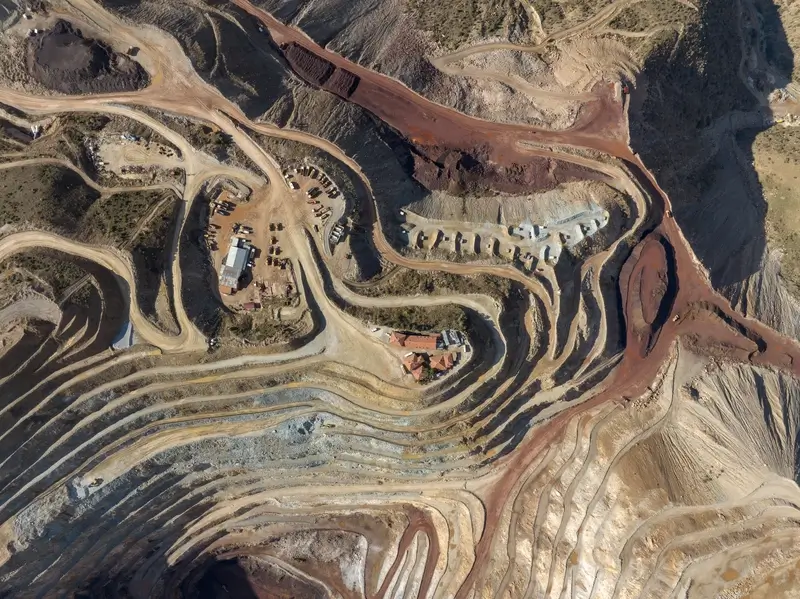
Most bauxite is found near the surface, so it is commonly mined by open-cut or strip mining. Bauxite can often be strip-mined economically because deposits are usually close to the terrain surface.
Strip Mining: The Standard Method
The typical mining sequence includes vegetation clearing, topsoil removal, overburden stripping, bauxite extraction, crushing, washing where needed and transport. Topsoil is often stored separately so it can be reused in rehabilitation.
Strip mining is efficient for shallow deposits, but it must be managed carefully. The mine plan should protect water flows, reduce erosion, control dust and prepare disturbed areas for restoration.
Environmental Considerations and Land Restoration
Bauxite mining affects land, vegetation and local ecosystems. Responsible operators therefore plan rehabilitation before mining begins, not after the ore is exhausted.
Rehabilitation should be tailored to local ecosystems and communities, with the goal of restoring the area as close as possible to its original state.
Important sustainability practices include progressive rehabilitation, topsoil preservation, native species replanting, water management, biodiversity monitoring and community consultation. For procurement teams, these issues increasingly influence supplier evaluation and ESG reporting.
Where Is Bauxite Found? Top Producing Countries
Bauxite is produced across several regions, but global supply is concentrated in a limited number of countries. According to USGS Mineral Commodity Summaries 2026, estimated world bauxite mine production in 2025 was 440 million tonnes, and world bauxite reserves were reported at 29 billion tonnes.
| Country | Annual production | Reserves | Key mining regions | Source year |
|---|---|---|---|---|
| Guinea | 150 million tonnes | 7.4 billion tonnes | Boke region, Kindia area, Sangaredi area | USGS 2026, 2025 estimate |
| Australia | 97 million tonnes | 73.7 billion tonnes total listed by USGS; JORC-compliant or equivalent reserves noted separately at 1.7 billion tonnes | Weipa, Gove, Darling Range, Boddington area | USGS 2026, 2025 estimate |
| China | 87 million tonnes | 710 million tonnes | Shanxi, Henan, Guangxi, Guizhou | USGS 2026, 2025 estimate |
| Brazil | 33 million tonnes | 1.7 billion tonnes | Para, Minas Gerais | USGS 2026, 2025 estimate |
| India | 25 million tonnes | 650 million tonnes | Odisha, Gujarat, Jharkhand, Chhattisgarh | USGS 2026, 2025 estimate |
| Indonesia | 10 million tonnes | 2.9 billion tonnes | West Kalimantan, Riau Islands | USGS 2026, 2025 estimate |
| Jamaica | 6.2 million tonnes | 2.0 billion tonnes | St. Ann, Manchester, Clarendon | USGS 2026, 2025 estimate |
| Russia | 5.7 million tonnes | 650 million tonnes | Urals, Siberia | USGS 2026, 2025 estimate |
| Saudi Arabia | 5.7 million tonnes | 180 million tonnes | Az Zabirah area | USGS 2026, 2025 estimate |
| Kazakhstan | 4.8 million tonnes | 160 million tonnes | Turgay region | USGS 2026, 2025 estimate |
The table shows why bauxite is both abundant and strategically sensitive. Aluminium supply chains depend not only on reserves, but also on mining permissions, refining capacity, energy availability, shipping routes and trade policy.
From Bauxite to Aluminium: The Production Chain
The journey from bauxite to aluminium profile has three major stages: refining, smelting and extrusion. Each stage changes the material physically and chemically.
Step 1: The Bayer Process
In the Bayer process, crushed bauxite is digested in hot caustic soda under pressure. Aluminium-bearing minerals dissolve into a sodium aluminate solution, while most iron-rich residue remains undissolved.
A common digestion temperature range is around 150-200 degrees C, although actual refinery conditions depend on mineralogy, especially the balance between gibbsite, boehmite and diaspore. The process then clarifies the liquor, precipitates aluminium hydroxide and calcines it to produce alumina.
The output is a fine white powder: aluminium oxide, or alumina. This is not yet aluminium metal.
Step 2: The Hall-Heroult Process
The Hall-Heroult process converts alumina into aluminium metal. Alumina is dissolved in molten cryolite and reduced electrolytically inside smelting cells.
This step is energy-intensive, which is why electricity source, smelter efficiency and recycled content are central to aluminium’s carbon footprint. The resulting molten aluminium can be cast into ingots, slabs or extrusion billets.
Step 3: Casting and Extrusion into Aluminium Profiles
For aluminium profiles, molten aluminium is cast into cylindrical billets. These billets are heated and pushed through a die, creating a continuous profile with a fixed cross-section.
The profile may then be cooled, stretched, cut, heat-treated, machined and surface-finished. Depending on the application, it can become a window system, LED channel, solar rail, machine frame, transport component or custom industrial profile.
This is where the upstream story becomes visible. A profile installed in a building or solar project began as bauxite, passed through alumina and aluminium production, and was finally shaped through extrusion.
Why Bauxite Matters for the Aluminium Industry
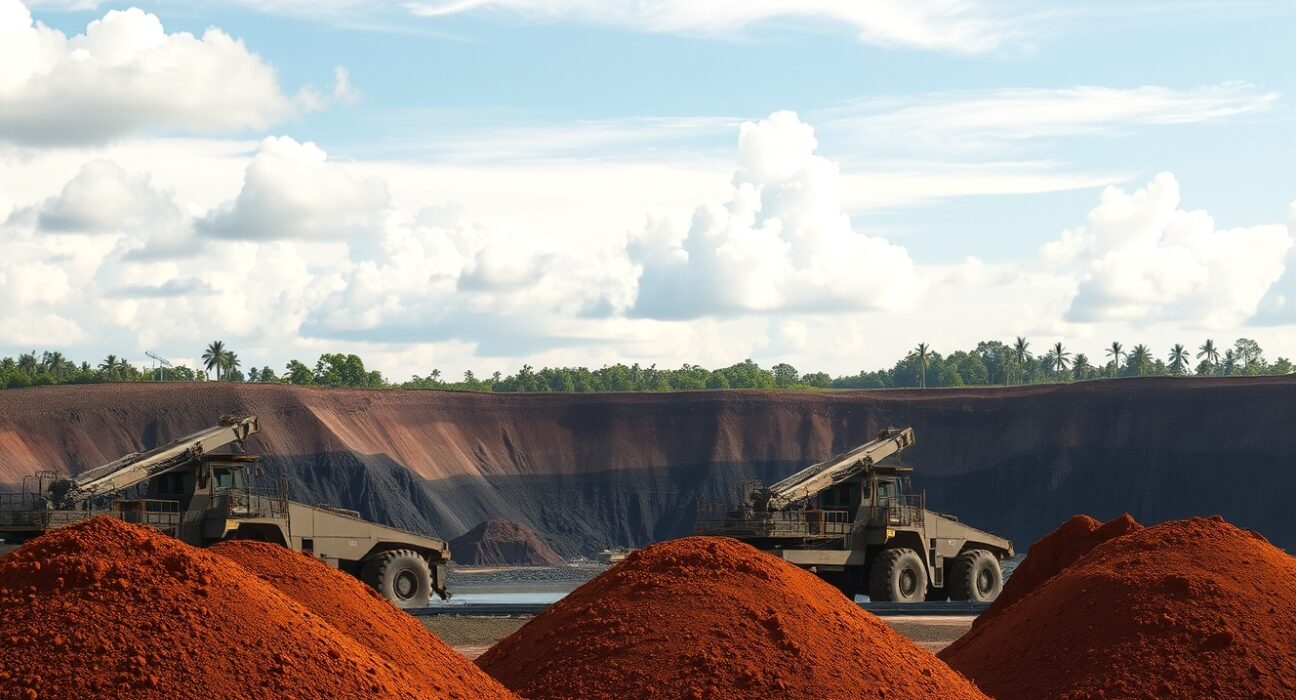
Bauxite matters because aluminium is only as reliable as the chain behind it. Ore quality influences refining efficiency. Refining influences alumina supply. Alumina supply affects billet availability, extrusion planning and long-term pricing.
For manufacturers such as Front Metal, the direct focus is not mining. It is the downstream transformation of aluminium into profiles and fabricated components. Still, understanding the bauxite-to-profile chain helps customers make better material, sustainability and procurement decisions.
Front Metal’s aluminium profile offering covers customized extrusions and fabricated components for windows, doors, electronics, transportation and many other applications. The company also positions itself as a supplier of bespoke and standard profiles for European and international architectural, industrial and customized projects.
See how bauxite becomes aluminium profiles: View aluminium profile products
Sources
- USGS Mineral Commodity Summaries 2026: bauxite and alumina production, reserves and conversion rule. USGS PDF
- USGS Bauxite and Alumina Statistics and Information: global bauxite use and Bayer process context. USGS page
- The Aluminum Association: Bauxite 101, Bayer and Hall-Heroult overview. Bauxite 101
- International Aluminium Institute: mining rehabilitation guidance. Rehabilitation guidance
- Front Metal product information: aluminium profiles and custom solutions. Front Metal products
FAQs
What is bauxite used for?
Bauxite is mainly used to produce alumina, which is then smelted into aluminium. Smaller volumes are used in refractories, cement, chemicals, abrasives, sandblasting media and ceramic proppants.
What is the chemical formula of bauxite?
Bauxite does not have one chemical formula because it is a rock, not a single mineral. Its main aluminium minerals are gibbsite Al(OH)3, boehmite AlO(OH) and diaspore AlO(OH).
Is bauxite a mineral or a rock?
Bauxite is a rock. It contains several minerals, mainly aluminium hydroxide minerals, plus impurities such as iron oxides, silica and titania.
What does bauxite look like?
Bauxite is often reddish-brown, brown, yellow, grey or off-white. Many samples look earthy or granular, and some contain rounded pisolitic structures.
Where is bauxite found in the world?
Major bauxite-producing countries include Guinea, Australia, China, Brazil, India, Indonesia and Jamaica. Large resources occur in Africa, Oceania, South America, the Caribbean and Asia.
What is the difference between bauxite and alumina?
Bauxite is the natural ore mined from the ground. Alumina is aluminium oxide produced by refining bauxite, usually through the Bayer process.
How much bauxite is needed to produce 1 tonne of aluminium?
As a general rule, about 4 tonnes of dried bauxite are needed to produce 2 tonnes of alumina, which can then produce about 1 tonne of aluminium.
Why is bauxite important to industry?
Bauxite is important because it is the primary commercial raw material for alumina and aluminium. Without stable bauxite supply, primary aluminium production is constrained.
Is bauxite mining sustainable?
Bauxite mining can be managed more responsibly through land rehabilitation, water control, biodiversity planning and community engagement. Sustainability depends on mine design, regulation and operator performance.
How does bauxite become an aluminium profile?
Bauxite is refined into alumina through the Bayer process, smelted into aluminium through the Hall-Heroult process, cast into billets and extruded through dies to form aluminium profiles.