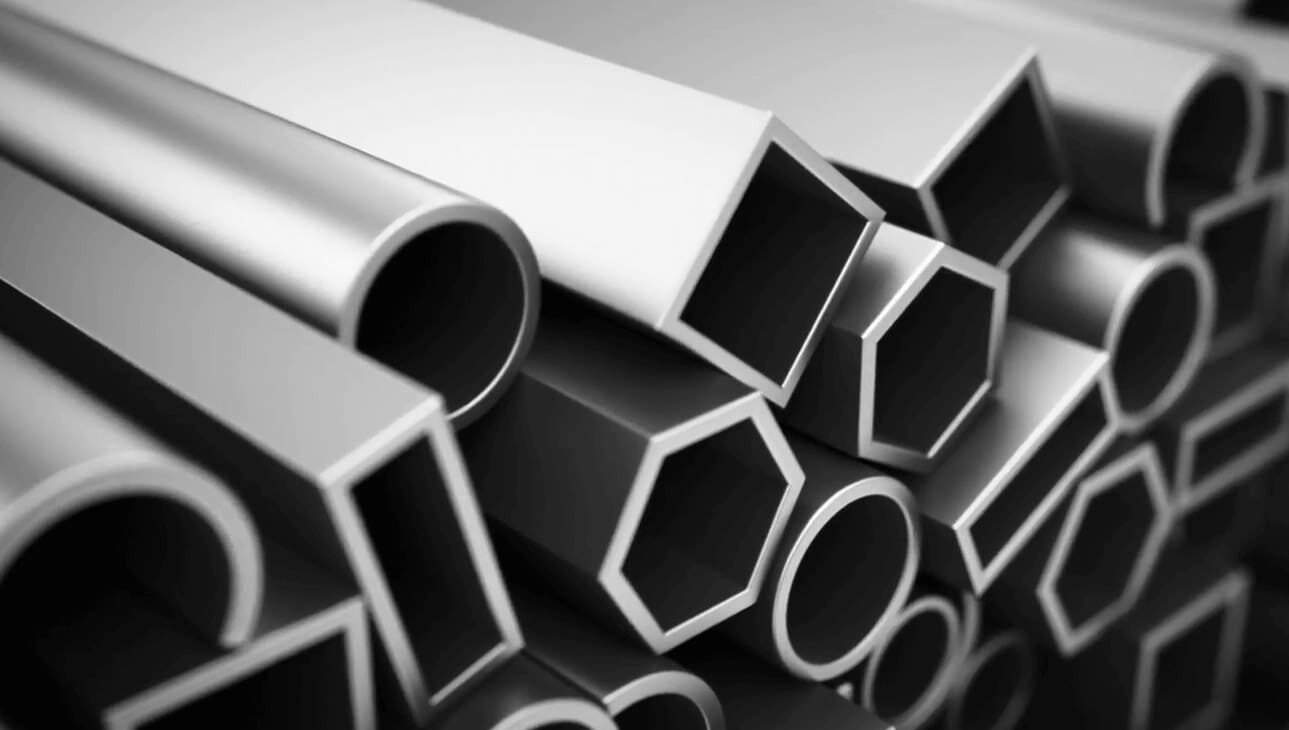
What Is an Aluminium Profile? Definition, Types and Industrial Applications
Industrial design and modern commercial architecture demand specialized materials that offer uncompromising strength, highly precise geometric tolerances, and exceptional longevity. Achieving these demanding structural specifications consistently across mass production relies completely on advanced metallurgical engineering.
An aluminium profile, also spelled aluminum profile in the US market, represents the pinnacle of this capability, transforming raw, cylindrical alloy billets into complex, continuous shapes designed to perform highly specific structural or decorative functions. Understanding the manufacturing process, mechanical properties and exact alloy specifications ensures that procurement managers and structural engineers source the optimal materials for their specialized projects.
What Is an Aluminium Profile?
An aluminium profile is a shaped, continuous length of metal created by forcing a heated aluminium alloy billet through a highly engineered steel die under extreme hydraulic pressure. This precision extrusion process produces specific cross-sectional shapes precisely tailored for designated load-bearing, architectural or industrial applications, combining remarkably lightweight characteristics with high structural integrity.
How Are Aluminium Profiles Manufactured? (Extrusion Process)
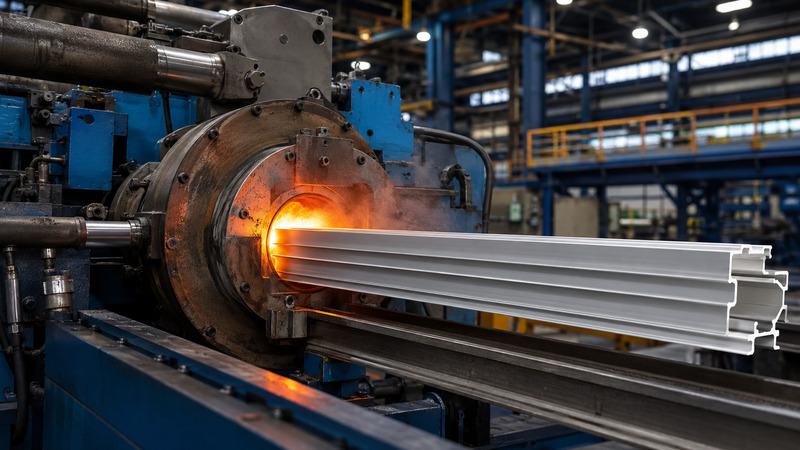
The physical transformation from a solid, cylindrical block of raw metal into a delicate LED housing or a massive load-bearing structural beam is executed via the complex extrusion process. The raw material, an alloyed billet, is systematically preheated to approximately 450–500°C. This specific temperature renders the metal highly malleable and capable of flowing without reaching its actual melting point of roughly 660°C.
A massive industrial hydraulic press applies immense longitudinal pressure, physically forcing the softened metal through the precision-cut aperture of a hardened steel die. As the hot metal exits the die, it permanently assumes the exact cross-sectional shape of the aperture. The continuous, hot profile is rapidly cooled using strategically positioned air fans or water quenches to instantly freeze the metallurgical grain structure.
After cooling, the profile is mechanically stretched to ensure perfect linear straightness and relieve built-up internal stresses. Finally, the lengths are precision-cut to standard European dimensions, typically 6,000 mm for industrial distribution, and subjected to artificial aging in heat treatment ovens to achieve their final mechanical temper and maximum strength.
Key Properties and Features of Aluminium Profiles
The widespread global adoption of this specific material across incredibly diverse engineering disciplines stems from a unique combination of physical and chemical properties.
Possessing a natural density of approximately 2.7 g/cm³, aluminium is roughly one-third the physical weight of traditional structural steel. This drastically reduces logistical transportation costs and minimizes structural dead loads in building design. Modern heat-treated 6000-series alloys consistently deliver impressive tensile strengths ranging from 150 to 310 MPa, depending precisely on the specific alloy series and the thermal temper applied during manufacturing.
Furthermore, the metal naturally forms a microscopic, highly dense oxide layer immediately upon exposure to atmospheric air. This passive layer effectively halts further oxidation, permanently preventing the rapid structural degradation and rust characteristic of ferrous metals.
High thermal transfer rates make the extruded profile the standard for heat sinks and complex thermal management systems in modern electronics. From a manufacturing perspective, the material can be precisely milled, drilled and tapped, and it is 100 percent recyclable, retaining its original metallurgical properties without degradation.
Main Types of Aluminium Profiles
The engineered geometry of the extrusion die explicitly dictates the profile’s ultimate mechanical function. Manufacturers classify these shapes into standard geometric sections and highly specialized, application-specific bespoke designs.
| Profile Type | Shape / Section | Main Use | Common Industries | Notes |
|---|---|---|---|---|
| Standard (L, U, T, H) | Basic geometric angles | Edge protection, framing | Construction, general fabrication | Universal utility components |
| Box Profile | Hollow square or rectangle | Structural support, posts | Architecture, transport | High torsional rigidity |
| LED Profile | Channel with fin or groove | Housing LED strip lights | Interior design, lighting | Acts as a thermal heat sink |
| Sigma Profile | Complex ribbed C-shape | Conveyor structural frames | Automation, machinery | Allows variable bolt positioning |
| Pipe / Tube | Hollow circular | Fluid transfer, handrails | Marine, plumbing, civic | Seamless extrusion preferred for pressure |
Standard Aluminium Profiles (L, U, T, H Sections)
These fundamental geometric shapes serve as the connective tissue in general industrial fabrication. L-profiles, commonly known as angles, provide robust structural edge protection and diagonal bracing. U-profiles, or channels, cap raw material edges and act as smooth sliding tracks. T-sections and heavy H-sections distribute vertical loads evenly across wide architectural spans, frequently serving as secondary structural supports.
Aluminium Box Profile
Featuring a hollow rectangular or perfectly square cross-section, the box profile delivers exceptional torsional rigidity and remarkably high strength-to-weight ratios. It consistently serves as the primary load-bearing column in lightweight industrial frameworks, commercial fenestration systems and heavy-duty commercial transport chassis.
Aluminium LED Profile
Specifically engineered to support the commercial lighting industry, these highly customized profiles house delicate, heat-sensitive LED strip boards. The extruded metal structure acts directly as a highly efficient thermal heat sink, rapidly dissipating the excess thermal energy generated by the diodes, thereby significantly extending the operational lifespan of the entire lighting system.
Aluminium Corner Profile
Designed specifically to navigate sharp 90-degree internal or external intersections smoothly, corner profiles systematically eliminate sharp edges in cleanroom environments, medical facilities and high-end commercial cabinetry. They provide reliable structural continuity while greatly enhancing the final aesthetic finish.
Aluminium Sigma Profile
Utilized extensively in modern industrial automation, the sigma profile features a complex, engineered cross-section with multiple integrated mounting slots. This specific functional geometry allows mechanical engineers to attach heavy brackets, optical sensors and rigid structural bracing without drilling into the metal, facilitating the rapid assembly and continuous modification of conveyor systems and factory machine guards.
Aluminium Frame Profile
Engineered with exceptionally tight dimensional tolerances designed to hold thick glass panes or acoustic panels securely, frame profiles form the structural backbone of modern architectural curtain walls, residential windows and commercial retail display cases.
Aluminium Pipe / Tube Profile
Available globally in various specific wall thicknesses, these hollow cylindrical profiles are deployed heavily for industrial fluid handling, high-pressure pneumatic lines and architectural handrails. Their symmetric, circular shape distributes internal dynamic pressures evenly across the entire material wall.
Custom Extruded Profiles
When standard geometries fail to meet specific, highly complex engineering criteria, procurement teams rely heavily on Front Metal’s advanced custom extrusion capabilities. Bespoke profiles integrate multiple independent functions, such as internal screw ports, thermal break cavities and complex snap-fit hinges, into a single, unified cross-section, permanently eliminating costly secondary assembly steps.
Need a custom aluminium profile for your project?
Contact Front Metal today for a tailored engineering consultation.
Contact Front MetalAluminium Profile Applications by Industry
The inherent versatility of the continuous extrusion process allows for seamless structural integration across the world’s most demanding industrial sectors.
Construction and Architecture
From towering commercial skyscraper curtain walls to premium residential window frames, the architectural sector demands exceptionally high weather resistance combined with ultra-slim visual sightlines. Profiles utilized here heavily prioritize specific, high-grade surface treatments to guarantee multi-decade longevity against aggressive urban climates.
Solar Energy and Renewables
The rapid, sustained global expansion of the renewable energy sector relies entirely on highly durable, precision-engineered mounting structures. Lightweight, heavily corrosion-resistant profiles form the rigid framing for photovoltaic panels and the underlying rail systems, ensuring absolute structural stability under severe wind and snow loads over decades of constant exposure.
Automotive and Transport
To successfully meet increasingly stringent fuel efficiency and carbon emission standards, global vehicle manufacturers continually replace heavy steel components with extruded aluminium chassis rails, complex crash boxes and internal structural reinforcements, drastically reducing overall vehicle weight while maintaining passenger safety.
Electrical and Electronics
Operating as highly efficient thermal conductors, specialized, densely finned profiles are precisely extruded to create complex heat sinks for computer processors, solar power inverters and high-output industrial lighting, successfully preventing critical thermal failure in expensive electronic arrays.
Furniture and Interior Design
Sleek, minimalist aesthetic demands have rapidly driven the widespread adoption of precisely finished architectural profiles in modern cabinetry, modular office partitions and heavy sliding door mechanisms, perfectly blending structural utility with premium visual appeal.
Industrial Machinery and Automation
The T-slot and Sigma profiles represent the standard for constructing robotic enclosures, automated assembly lines and heavy-duty industrial workbenches. The highly modular nature of these specific profiles allows for rapid mechanical prototyping and swift factory floor reconfiguration without welding.
Common Alloys Used in Aluminium Profiles (6000 Series & Beyond)
The structural integrity and physical capabilities of an extruded profile are dictated entirely by its specific metallurgical chemistry. The 6000 series, alloyed primarily with precise ratios of magnesium and silicon, dominates the global extrusion industry due to its excellent balance of extrudability, mechanical strength and natural corrosion resistance.
| Alloy | Typical Properties | Common Temper | Best Use Cases | Notes |
|---|---|---|---|---|
| EN AW 6060 | High extrudability, excellent surface finish | T6 | Architectural windows, decor, light frames | Replaces older alloys for premium aesthetics |
| EN AW 6063 | Very good corrosion resistance, moderate strength | T5 / T6 | Standard architectural applications, heat sinks | The global standard for general extrusions |
| EN AW 6061 | High mechanical yield, exceptional strength | T6 | Structural beams, transport chassis, aerospace | Slightly lower surface finish quality than 6063 |
In the strict European manufacturing market, exact standards such as EN AW 6060 and EN AW 6063 are rigorously applied. The thermal temper designation, such as T5, cooled directly from an elevated temperature shaping process and artificially aged, or T6, solution heat-treated and artificially aged, explicitly defines the final mechanical yield strength of the metal.
For instance, a 6061-T6 profile will consistently demonstrate a highly robust yield strength of approximately 276 MPa, making it the ideal choice for heavy load-bearing applications.
Surface Treatments: Anodizing, Powder Coating, Wood Coating
While raw aluminium naturally resists severe corrosion, specific industrial and architectural applications demand enhanced environmental protection and specialized aesthetic finishes.
Anodizing
Anodizing is an advanced electrochemical process that artificially thickens the metal’s natural oxide layer. For protected interior applications, a coating thickness of 10 to 15 microns is generally sufficient. However, for aggressive exterior or highly corrosive marine environments, an architectural Class I anodized finish requiring a minimum of 20 to 25 microns is strictly recommended to prevent pitting and long-term degradation.
Powder Coating
Powder coating involves a dry, electrostatically applied polymer powder that is permanently cured under intense heat to form a tough, highly durable skin. This specific treatment provides virtually unlimited custom color options while offering excellent long-term resistance against UV radiation and physical abrasion.
Wood Coating
Wood coating achieves a premium aesthetic by utilizing advanced dye sublimation technology. A base powder-coated profile is carefully wrapped in a specialized printed film and heated uniformly under a vacuum. The ink transfers deeply into the powder coat, yielding a highly realistic wood grain finish that requires zero maintenance compared to natural timber products.
Aluminium Profile vs Steel Profile: Which to Choose?
Structural engineers must constantly evaluate complex material trade-offs during the initial structural design phase.
| Material | Weight | Strength | Corrosion Resistance | Recyclability | Typical Applications | Cost Consideration |
|---|---|---|---|---|---|---|
| Aluminium Profile | Light, approximately 2.7 g/cm³ | High, alloy dependent | Excellent, natural oxide layer | 100% | Aerospace, architecture, automation | Moderate to high initial cost, very low lifecycle cost |
| Steel Profile | Heavy, approximately 7.8 g/cm³ | Very high | Poor, requires galvanization | 100% | Heavy infrastructure, extreme load spans | Low initial cost, higher maintenance cost |
| PVC Profile | Very light | Low, needs steel core | High, immune to rust | Moderate | Budget residential windows | Lowest initial cost, shorter total lifespan |
While steel possesses superior ultimate tensile strength, its massive weight and high susceptibility to rust make it unsuitable for precise architectural fenestration or lightweight commercial transport chassis. Conversely, highly engineered aluminium achieves massive structural spans with ultra-slim profiles, maximizing aesthetic light without obstructing views, while demanding almost zero long-term maintenance.
How Are Aluminium Profile Prices Determined?
Procurement professionals must clearly understand that industrial profile pricing is a highly dynamic metric. The baseline cost is established strictly by the London Metal Exchange daily cash price for raw aluminium. Added directly to this is the specific billet premium, which covers the distinct metallurgical cost of alloying the raw metal.
The extrusion manufacturer then logically applies a conversion fee, which encompasses the complex mechanical cost of pressing, stretching and heat-treating the metal. Finally, secondary factory operations such as precise CNC machining, complex custom die manufacturing and advanced surface treatments, including anodizing or powder coating, ultimately define the final commercial unit price.
How to Choose the Right Aluminium Profile for Your Project
Selecting the correct component requires analyzing the complete application environment. For robust structural frameworks bearing heavy static loads, engineers should prioritize EN AW 6061-T6 box or H-profiles. If the project involves highly visible architectural facades constantly exposed to marine environments, mandate an EN AW 6063-T6 profile equipped with a thick Class I 25-micron anodized finish.
Always verify that standard industrial lengths, typically 6 meters, accommodate your specific yield requirements, or actively request custom cut-to-length services to minimize fabrication waste.
Why Front Metal for Custom Aluminium Profiles?
Front Metal operates as a dedicated, tailor-made solution center, expertly managing the entire production lifecycle from precision die engineering to final global shipment. Possessing robust extrusion press capacity and operating strictly within stringent European standards, Front Metal guarantees tight dimensional tolerances and flawless surface finishes.
Guided firmly by the principle “Bespoke, Always,” the engineering team ensures every specific project requirement is met with uncompromising industrial quality.
Frequently Asked Questions
What is an aluminium profile used for?
Aluminium profiles are utilized globally to construct architectural window frames, curtain walls, industrial automation conveyors, automotive chassis components and thermal heat sinks for electronics.
How are aluminium profiles made?
Heated alloy billets are pushed under extreme hydraulic pressure through a precisely shaped steel die. The continuous metal shape is then cooled, stretched, cut to length and heat-treated to ensure mechanical strength.
What are the most common types of aluminium profiles?
Standard geometries include L, U, T and H shapes. Industrial types include hollow box profiles, modular T-slot or Sigma profiles for machinery and specialized thermal heat sinks.
What is the difference between aluminium and steel profiles?
Aluminium is approximately one-third the weight of steel, naturally resists corrosion without needing paint and is highly malleable for complex shapes. Steel is heavier and stronger but highly susceptible to rust.
Are aluminium profiles recyclable?
Yes, aluminium profiles are 100 percent recyclable and retain their full mechanical properties after the recycling process, requiring only 5 percent of the energy needed for primary production.
What alloys are used for aluminium profiles?
The 6000 series is dominant. EN AW 6060 and 6063 are standard for architectural and complex shapes, while 6061 is preferred for high-stress structural and load-bearing applications.
What is the standard length of aluminium profiles?
The global industrial standard length for distribution and shipping is 6 meters, or 6,000 mm, though mills frequently provide custom cut-to-length sizes based on project requirements.
Can aluminium profiles be custom-designed?
Yes. Extrusion dies can be custom-engineered to create highly complex, multi-functional cross-sections specifically tailored to unique project assemblies, eliminating the need for mechanical joining.
How long do aluminium profiles last?
In architectural and structural applications, high-quality anodized or powder-coated profiles routinely last over 50 years with minimal maintenance, vastly outperforming PVC alternatives.
What determines aluminium profile prices?
Prices fluctuate based on the global raw material baseline, specific alloy premiums, manufacturing conversion fees, die complexity and the type of surface treatment required.